Silent Degradation: How Time and Environment Are Quietly Compromising Your Wrapped Inventory
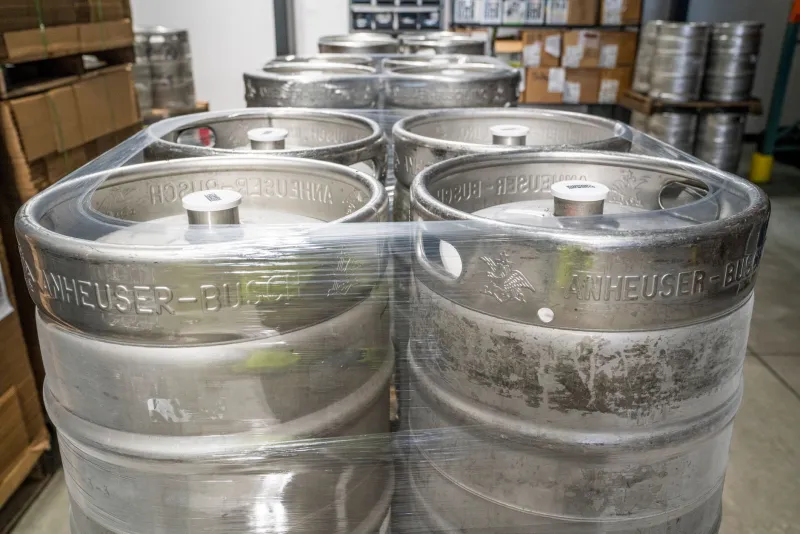
For most US manufacturers and distributors, shrink wrap represents a straightforward promise: seal the product, protect it from contamination, maintain presentation, and deliver it intact. That promise holds — until it doesn't. And when it fails, the reasons are rarely obvious at the point of discovery.
What many operations fail to account for is that shrink wrap is not a static material. From the moment it is applied, it begins a slow, measurable process of change. Temperature swings, light exposure, chemical interactions with packaged contents, and the simple passage of time all affect how the film performs. The result, in many cases, is that products reach their destination — or worse, sit in long-term storage — in a compromised state that no one anticipated.
This is the shrink wrap shelf life paradox: the very material designed to extend product viability can, under the wrong conditions, accelerate its decline.
The Science of Film Degradation
Most commercial shrink wrap used in industrial settings is manufactured from polyolefin, polyethylene (PE), or polyvinyl chloride (PVC). Each of these polymer-based materials undergoes molecular-level changes when exposed to environmental stressors over time.
Polyolefin films, widely regarded as the premium standard for food-adjacent and consumer goods applications, are engineered with stabilizers that resist oxidation and UV damage. However, those stabilizers are not permanent. They are consumed gradually as they neutralize environmental threats. Once depleted, the underlying polymer chains become vulnerable to cross-linking and chain scission — processes that cause the film to become brittle, cloudy, or prone to micro-cracking.
PVC films, still used in certain industrial and retail applications, carry an additional concern: plasticizer migration. Over time, the plasticizers that give PVC its flexibility can leach out of the film and, in some cases, transfer into the surface of the packaged product. For items with porous surfaces, soft coatings, or chemical sensitivity, this is not a trivial issue.
Polyethylene films, particularly low-density variants, are generally more resistant to chemical migration but are also more susceptible to UV-induced oxidation, which manifests as yellowing, increased stiffness, and eventual seal failure.
UV Exposure: The Invisible Accelerant
Warehouse environments in the United States vary enormously in their light exposure profiles. Facilities with skylights, large roll-up doors, or inadequate racking layouts may expose palletized inventory to significant amounts of direct or indirect sunlight over the course of weeks or months.
UV radiation is one of the most potent accelerants of polymer degradation. Even indirect exposure — reflected light from concrete floors or translucent roofing panels — contributes measurable photodegradation to unprotected film. The effects compound over time: what begins as minor surface oxidation can progress to seal brittleness, reduced tensile strength, and ultimately, packaging failure during handling or transit.
For operations storing products for 90 days or longer, UV exposure is not a theoretical risk — it is a quantifiable one. Yet very few facilities conduct routine assessments of their storage light environment in relation to their packaging specifications.
Seal Integrity: The First Thing to Go
Before a shrink wrap film becomes visibly compromised, its seals typically show the earliest signs of stress. Heat seals in shrink-wrapped packages depend on the fusion of polymer layers at precise temperatures. As the film ages and its molecular structure changes, the cohesive strength of those seals diminishes.
This matters significantly in environments with fluctuating temperatures — a common reality in facilities across the American South and Southwest, where warehouse temperatures can swing dramatically between seasons or even between day and night cycles. Repeated thermal expansion and contraction stress seal points in ways that static quality checks at the time of packaging cannot predict.
The practical consequence is that a product wrapped and sealed in January may arrive at a customer's dock in August with compromised seals — not because of application errors, but because the packaging material itself was not suited to the duration and conditions of its storage lifecycle.
Chemical Compatibility: An Underexamined Variable
Not all products and films are chemically neutral with respect to one another. Certain industrial goods — lubricants, solvents, adhesives, and even some food-grade materials — emit volatile compounds that interact with the inner surface of shrink wrap over time.
In enclosed packaging, these compounds have nowhere to go. The result can be surface etching, discoloration, or in more severe cases, actual degradation of the film's barrier properties. For manufacturers of specialty chemical products, hardware goods, or anything with a surface coating, this interaction deserves careful evaluation before committing to a long-term packaging configuration.
Equally, some shrink wrap formulations include slip agents, anti-fog additives, or antistatic compounds that can interact with sensitive product surfaces. This is a particular concern in electronics packaging and precision instrument storage, where surface contamination is a critical quality factor.
Practical Strategies for US Manufacturers
Addressing these risks does not necessarily require switching film suppliers or overhauling an entire packaging line. Several targeted strategies can meaningfully extend both film performance and product viability within existing operational frameworks.
Audit your storage environment. Conduct a systematic review of light exposure levels, temperature variation ranges, and average dwell times for wrapped inventory. Many operations are surprised to discover that their longest-stored products are also their most UV-exposed.
Match film specifications to lifecycle, not just application. When selecting shrink wrap, the conversation should extend beyond gauge and shrink ratio. Ask your supplier for UV stabilizer ratings, plasticizer content disclosures for PVC films, and documented shelf life data under specified storage conditions.
Implement rotation discipline. First-in, first-out (FIFO) inventory management is standard advice — but it is inconsistently applied to wrapped goods sitting in secondary storage. Establishing clear maximum dwell times for wrapped inventory, and enforcing them operationally, reduces the risk of silent degradation going undetected.
Consider secondary UV protection for high-value or long-dwell inventory. Opaque stretch film overwraps, UV-blocking pallet covers, or repositioned racking away from light sources are cost-effective interventions that do not require changes to primary packaging.
Test periodically, not just at application. Quality assurance protocols that only test film performance at the point of application miss the degradation that occurs in storage. Periodic seal integrity checks and film condition assessments on a representative sample of stored inventory provide a much more accurate picture of packaging health over time.
Rethinking the Packaging Timeline
The industrial packaging industry in the United States has long focused on performance at the point of application — shrink uniformity, seal strength, line speed compatibility. These are legitimate and important metrics. But they represent only the beginning of a product's packaging lifecycle.
As supply chains grow more complex and storage durations extend, the performance of shrink wrap over time deserves the same analytical rigor applied to its initial application. The materials are not inert. The environment is not neutral. And the costs of packaging degradation — in returns, quality disputes, and customer confidence — are entirely real.
Building a packaging strategy that accounts for what happens between the wrapping line and the end user is not a luxury. For operations competing on product quality and delivery reliability, it is a fundamental operational responsibility.