What Budget Shrink Wrap Is Really Costing Your Operation
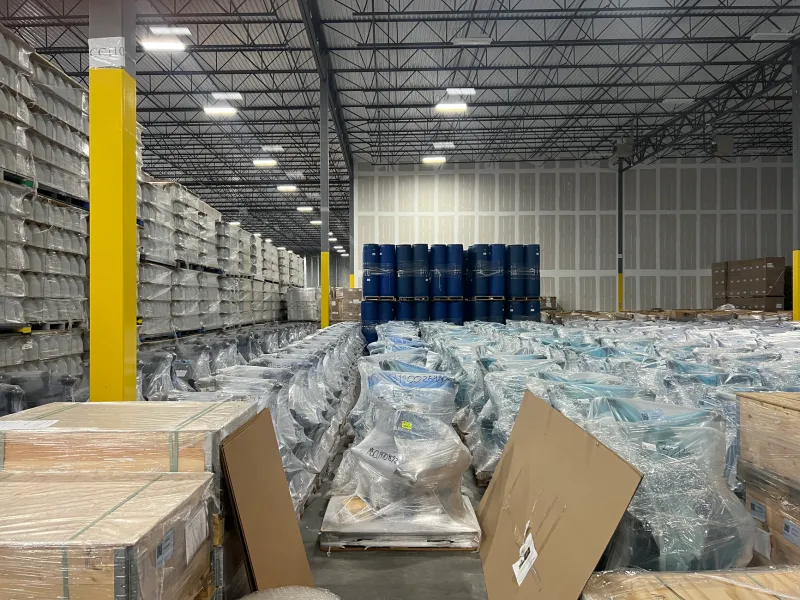
For many manufacturers and distributors, the appeal of low-cost shrink wrap is straightforward: spend less per roll, reduce overhead, protect the bottom line. The reality, however, tells a far more complicated story. From product damage claims to eroded customer trust, the true price of bargain packaging frequently dwarfs whatever savings appeared on the original purchase order.
At ShrinkWrap VB, we work with industrial clients across the United States every day. What we hear repeatedly is a version of the same experience: a company switches to a cheaper film to cut costs, and within a quarter, they are absorbing losses they never anticipated. This article examines exactly where those losses originate — and why investing in quality industrial packaging is not an expense, but a financial safeguard.
The Illusion of Savings at the Point of Purchase
When a purchasing manager compares two rolls of polyolefin shrink wrap and sees a 30 percent price difference, the lower-cost option looks like an obvious win. However, this comparison only accounts for one variable in a much larger equation.
Film gauge, tensile strength, puncture resistance, and clarity all vary significantly between commodity-grade and industrial-grade shrink wrap. Budget films are typically thinner, more prone to tearing during application, and less tolerant of temperature fluctuations during transit. These characteristics may not be immediately visible on a spec sheet, but they become apparent the moment a pallet of goods travels across state lines in the back of a freight truck during a July heat wave — or sits in an unheated warehouse in January.
The initial savings of a few cents per foot can evaporate entirely once product losses, repackaging labor, and return freight costs are factored into the equation.
Product Damage: The Most Visible Line Item
According to supply chain industry data, packaging failure is among the leading causes of product damage during shipping and storage in the United States. While precise figures vary by sector, some estimates suggest that packaging-related damage accounts for hundreds of millions of dollars in annual losses across domestic manufacturing and distribution.
Consider a mid-sized food distributor packaging bulk dry goods for retail delivery. A downgrade to a thinner, less puncture-resistant film may save $400 per month in packaging costs. However, if even two pallets per month arrive at retail destinations with compromised wrap — allowing moisture infiltration or pest access — the cost of replacement product, additional freight, and retail penalties can easily reach $2,000 to $5,000 in a single incident.
The math is unambiguous. A single damage event can erase months of accumulated packaging savings.
Customer Returns and Retail Chargebacks
In the consumer goods and retail supply chain, damaged or poorly packaged product does not simply disappear. It generates chargebacks — financial penalties that retailers levy against suppliers whose shipments fail to meet packaging or condition standards.
Major US retailers including large grocery chains and big-box stores maintain strict vendor compliance programs. Shipments arriving with torn, unsealed, or visibly compromised shrink wrap are subject to rejection, repackaging fees, or direct deductions from invoice payments. For high-volume suppliers, these chargebacks can run into tens of thousands of dollars annually.
Beyond the financial penalties, repeated packaging failures place supplier relationships at risk. Buyers at retail organizations have limited patience for vendors who generate recurring compliance issues. Once a supplier is flagged for poor packaging performance, regaining preferred status is a lengthy and uncertain process.
Brand Reputation: The Cost That Does Not Appear on Any Invoice
Perhaps the most underappreciated consequence of inadequate industrial packaging is its effect on brand perception. In today's market, where photographs of damaged shipments can be shared instantly across social media platforms and B2B review sites, a single visually unappealing delivery can reach an audience far beyond the original recipient.
For manufacturers of premium or specialty products, packaging is an extension of brand identity. A high-quality product arriving in torn, cloudy, or poorly applied shrink wrap communicates carelessness — regardless of the product's actual quality. Customers associate the condition of packaging with the standards of the company behind it.
This reputational dimension is particularly significant for businesses operating in competitive markets where multiple vendors offer comparable products. When price and quality are roughly equivalent, presentation and reliability become differentiating factors. Inferior packaging undermines both.
A Direct Cost Comparison: Commodity Film vs. Industrial-Grade Film
To illustrate the financial stakes concretely, consider the following simplified comparison for a regional electronics components distributor shipping approximately 500 pallets per month.
Commodity-grade shrink wrap scenario:
- Film cost per month: $1,800
- Estimated damage/return rate: 3.5 percent of shipments
- Average cost per damaged shipment (product replacement + freight + labor): $320
- Monthly damage-related losses: approximately $5,600
- Total effective monthly packaging cost: $7,400
Industrial-grade shrink wrap scenario:
- Film cost per month: $2,600
- Estimated damage/return rate: 0.6 percent of shipments
- Average cost per damaged shipment: $320
- Monthly damage-related losses: approximately $960
- Total effective monthly packaging cost: $3,560
In this scenario, the higher-cost film delivers a net monthly saving of nearly $3,800 — not because it is inexpensive, but because it performs reliably enough to prevent the downstream costs that cheaper alternatives generate.
What to Look for in Industrial Packaging That Delivers Real Value
Not all shrink wrap is created equal, and identifying quality industrial film requires attention to several key specifications.
Gauge consistency is fundamental. Industrial-grade films maintain uniform thickness across the roll, ensuring predictable performance during application and sealing. Commodity films frequently exhibit gauge variation that leads to weak points and seal failures.
Puncture and tear resistance determine how well a film withstands the physical stresses of palletizing, freight handling, and storage. Films engineered for industrial use incorporate cross-linking or multi-layer construction that dramatically improves durability compared to single-layer budget alternatives.
Optical clarity matters both for retail presentation and for inventory management. High-clarity films allow barcodes and labels to remain scannable through the wrap, reducing handling errors and maintaining supply chain efficiency.
Temperature performance is critical for businesses shipping across diverse US climates. Quality industrial films maintain their integrity across a broad temperature range, preventing brittleness in cold conditions and excessive tackiness in heat.
Transparency as a Business Standard
At ShrinkWrap VB, we believe that industrial businesses deserve complete transparency when evaluating packaging solutions. That means providing accurate specifications, honest comparisons, and guidance rooted in operational reality rather than price-point marketing.
The conversation around packaging costs should never begin and end at the purchase price of the film. It should encompass total cost of ownership — including the damage rates, labor inefficiencies, and relationship risks that cheaper materials introduce into an operation.
Businesses that approach packaging as a strategic investment rather than a commodity expense consistently report stronger supply chain performance, fewer customer service incidents, and greater confidence in their brand presentation. The difference, more often than not, comes down to the quality of the wrap protecting their product.
When the full financial picture is visible, the case for industrial-grade shrink wrap is not a difficult one to make.