Cold Logic, Warm Reality: How Your Climate-Controlled Warehouse May Be Undermining Shrink Wrap Performance
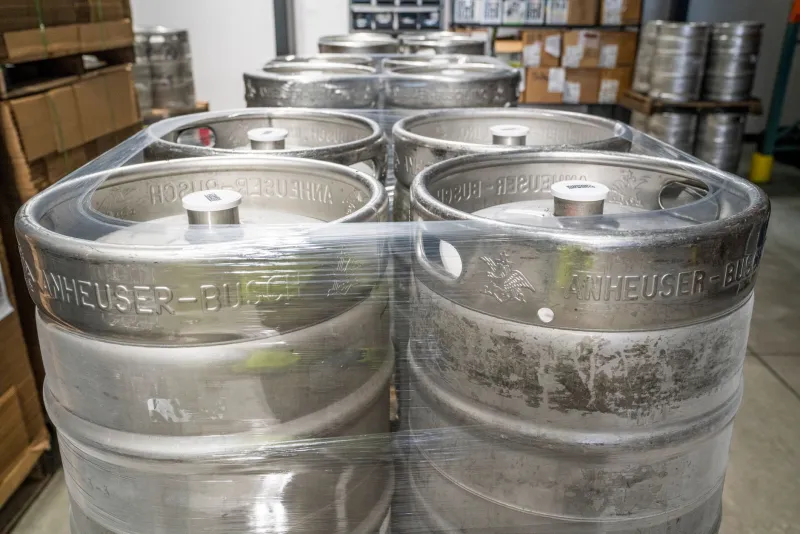
For most industrial operations, a climate-controlled facility represents a significant investment in product protection. The assumption is straightforward: stable environments preserve inventory, and shrink-wrapped goods stored in a regulated space should arrive at their destination in the same condition they left the packaging line. That assumption, while reasonable on its surface, contains a dangerous blind spot.
The relationship between temperature management and shrink wrap performance is neither linear nor intuitive. In fact, some of the most damaging conditions for wrapped goods are created not by heat or humidity alone, but by the very systems designed to control them. Understanding this paradox is not an academic exercise — it has direct implications for seal failure rates, product return costs, and the operational credibility of your packaging program.
The Misconception Built Into Most Facility Planning
When industrial managers think about temperature and shrink wrap, the concern is almost always about heat. High temperatures soften polyolefin and PVC films, reduce tensile strength, and can cause premature seal failure. That concern is legitimate. But it has created a compensatory reflex in many facilities: keep it cold, keep it consistent, and the wrap will hold.
The problem is that "cold" is not a neutral state for shrink wrap materials. Most standard polyolefin films are engineered to perform within a specific thermal range — typically between 50°F and 80°F for long-term storage. Below that range, the material begins to lose the elasticity that gives it protective value. Films become brittle at the molecular level, seals that were applied correctly under normal conditions lose their pliability, and the wrap's ability to conform to load shifts during transit is significantly reduced.
A warehouse maintained at 45°F to protect temperature-sensitive goods alongside wrapped industrial products is not a neutral environment for the packaging. It is an actively hostile one.
Thermal Cycling: The Hidden Damage Mechanism
Beyond static over-cooling, the more insidious threat is thermal cycling — the repeated expansion and contraction of shrink wrap material as temperatures fluctuate throughout the day, across shifts, or between storage zones.
Consider a common scenario in US distribution facilities: goods are stored in a climate-controlled warehouse, moved to a loading dock area that is not temperature-regulated, staged outdoors during peak shipping hours, and then loaded into a trailer. That sequence can expose wrapped inventory to temperature swings of 30°F to 50°F within a matter of hours. Each transition stresses the film and, more critically, the seal points.
Seals are the most vulnerable component of any shrink wrap application. They are created through heat bonding, and their structural integrity depends on the film maintaining a consistent molecular structure. Repeated thermal cycling causes micro-stress at seal edges — damage that is invisible to the naked eye during inspection but manifests as failure under the mechanical stress of transit. By the time a return claim arrives on your desk, the origin of the failure has long since been obscured.
This is why thermal cycling rarely appears in post-incident analysis. The damage accumulates gradually, across multiple temperature transitions, and the final failure point is typically attributed to shipping conditions rather than the packaging environment where the degradation actually began.
The Specific Ranges That Govern Material Behavior
Shrink wrap performance is not a single variable — it is a function of the film type, gauge, application method, and the thermal history of the material from the moment it leaves the roll. That said, several general thresholds are well-established in industrial packaging practice.
Polyolefin films, which represent the majority of industrial shrink wrap applications in the US, begin to exhibit measurable brittleness below 50°F. At 40°F and below, seal integrity can degrade by a meaningful margin depending on the specific formulation and gauge. PVC films, less common in industrial settings but still present in certain applications, are even more temperature-sensitive, with performance degradation beginning at higher thresholds.
On the upper end, sustained exposure above 90°F accelerates film aging, reduces clarity, and softens seals — particularly in high-humidity environments where heat and moisture combine to accelerate material breakdown.
The practical implication is that the optimal long-term storage range for most shrink-wrapped industrial goods sits between 55°F and 75°F, with relative humidity controlled between 40% and 60%. These are not arbitrary numbers. They reflect the thermal envelope within which film elasticity, seal strength, and material longevity are all maintained at acceptable levels.
What Most Operations Are Not Tracking
The financial cost of thermal cycling is real, but it is rarely captured in standard operational reporting. Return rates are tracked. Damage claims are logged. But the connection between facility temperature management and packaging failure is almost never drawn because the data required to make that connection is not being collected.
A meaningful assessment of thermal impact on your shrink wrap program requires temperature logging at multiple points in the product journey: storage zone, staging area, loading dock, and trailer interior. It requires correlating that data with seal failure rates and return patterns over time. And it requires a willingness to question the assumption that a climate-controlled facility is automatically a packaging-friendly one.
Facilities that have undertaken this kind of analysis frequently discover that their most expensive packaging failures are concentrated in products that moved through the greatest number of temperature transitions — not necessarily those stored in the warmest or coldest zones.
Practical Steps for Thermal Risk Reduction
Addressing thermal risk in a shrink wrap operation does not require a wholesale redesign of your facility. It requires targeted attention to the transition points where temperature change is most abrupt and most frequent.
First, evaluate your staging and dock areas. These zones are often the largest source of thermal cycling in an otherwise controlled facility. Installing dock seals, improving insulation at transition points, and staging goods in conditioned areas rather than unregulated dock floors can meaningfully reduce the temperature swings that wrapped inventory experiences before it ever reaches a truck.
Second, review your storage zone assignments. If temperature-sensitive products are being stored at temperatures that fall outside the optimal range for your shrink wrap film, a conversation with your packaging supplier about film formulations better suited to lower-temperature environments may be warranted. Some polyolefin formulations are specifically engineered for cold-storage applications and maintain elasticity at temperatures that would embrittle standard films.
Third, consider implementing simple temperature logging for a defined period. Inexpensive data loggers placed with shipments through your standard handling sequence will reveal the actual thermal profile your wrapped goods experience — and that data will almost certainly challenge assumptions your team currently holds.
Rethinking the Climate-Control Assumption
The goal of this analysis is not to argue against climate-controlled facilities. Temperature and humidity management remain essential tools for protecting inventory and maintaining product quality. The argument is more specific: climate control is not a substitute for understanding the thermal requirements of your packaging materials, and the presence of a regulated environment does not guarantee that your shrink wrap is performing as intended.
The most effective industrial packaging programs treat the facility environment as a variable to be managed in relation to material performance — not as a fixed condition that packaging must simply endure. When those two elements are aligned, the result is fewer failures, lower return costs, and a shrink wrap operation that delivers consistent results across the full product journey.