What Your Warehouse Is Quietly Destroying: The Real Cost of Shrink Wrap Failure in Static Storage
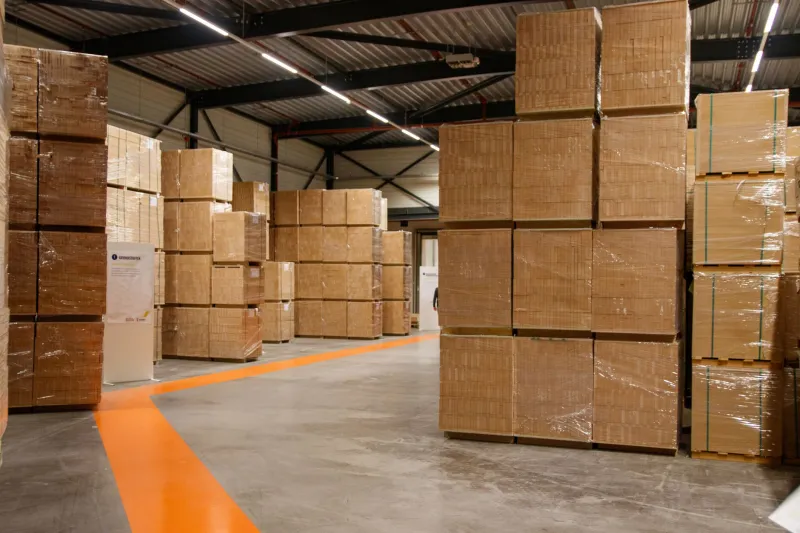
When businesses conduct post-incident reviews of damaged inventory, the conversation almost always gravitates toward transit. Forklifts, freight handling, long-haul vibration — these are the culprits that dominate damage assessments and insurance claims. What rarely surfaces in those conversations is a more insidious category of loss: product degradation caused by shrink wrap failure that occurs while goods sit completely still on a warehouse shelf or pallet rack.
The assumption that packaged inventory is "safe" once it reaches a storage position is one of the most expensive misconceptions in industrial operations. Static storage is not a neutral environment. It is an active one, and shrink wrap placed under the wrong conditions will deteriorate in ways that compound quietly over days, weeks, and months — often without triggering any immediate alert.
Why Static Storage Is Riskier Than Most Operations Assume
Transit-related damage is visible and traceable. A pallet arrives with torn wrap, crushed corners, or moisture infiltration, and the source of the problem is relatively easy to identify. Storage-related wrap failure is different. It develops gradually, and by the time the damage becomes apparent — typically at the point of pick, dispatch, or customer receipt — the origin of the problem has long since become unclear.
This ambiguity is precisely what makes storage-related shrink wrap failure so costly. Without a clear attribution point, businesses absorb the loss rather than investigate its root cause. Returns get processed, damaged goods get written off, and the underlying storage conditions that created the problem remain unchanged.
The financial exposure from this cycle is substantial. Industry estimates suggest that US warehouses operating without structured wrap-integrity protocols lose between two and five percent of stored inventory value annually to packaging-related degradation. For a mid-sized distributor carrying $4 million in warehoused product, that range translates to between $80,000 and $200,000 in annual losses — most of which never appear as a line item in any damage report.
The Environmental Factors That Degrade Wrap Before Products Ever Move
Shrink wrap is engineered to perform within defined environmental parameters. When storage conditions fall outside those parameters, the material begins to break down structurally, even under zero mechanical stress.
Temperature cycling is among the most damaging and least monitored factors in American warehouse environments. Facilities that lack climate control — or that rely on inconsistent HVAC systems — expose wrapped inventory to repeated expansion and contraction cycles. Polyolefin and PVC-based films are particularly vulnerable to this pattern. Over time, micro-fractures develop in the film surface, reducing puncture resistance and creating pathways for moisture infiltration.
Humidity accumulation presents a related but distinct problem. In warm, humid conditions — common across the Gulf Coast, Southeast, and Mid-Atlantic regions during summer months — condensation can form between the film and the product surface. For goods with paper-based packaging, metal components, or moisture-sensitive materials, this condensation can cause spoilage, corrosion, or label degradation long before the outer wrap shows any visible sign of failure.
UV exposure from skylights, loading dock doors, or inadequate lighting fixtures accelerates polymer degradation in certain film types. Wrapping materials not rated for UV resistance will yellow, become brittle, and lose tensile strength when exposed to consistent light over extended storage periods.
Stacking Practices That Turn Structural Pressure Into Packaging Failure
Beyond environmental factors, the physical configuration of stored inventory plays a significant role in wrap degradation. Improper stacking is one of the most common — and most preventable — sources of storage-related packaging failure.
When pallets are double- or triple-stacked without adequate load-bearing consideration, the wrap on lower units absorbs compressive forces that exceed its design tolerances. This is especially problematic with irregularly shaped products, where weight distribution is uneven and pressure concentrates at specific points on the film surface. Over time, that concentrated pressure causes the wrap to thin, stretch, or puncture — compromising the seal without any visible external event.
Consider a concrete example: a regional food distributor storing boxed dry goods on double-stacked pallets in a facility without climate control. The bottom pallet carries roughly 2,400 pounds of stacked product above it. The shrink wrap, selected at a standard gauge appropriate for single-pallet storage, is not rated for that load. Over a 60-day storage period, the film at the base of the lower pallet thins significantly. Moisture from seasonal humidity infiltrates through the compromised seal. By the time those pallets are picked for dispatch, a measurable percentage of the inner boxes have absorbed enough moisture to cause quality failures — failures that only become apparent after delivery.
The direct cost of that scenario includes product write-offs, return processing, and replacement shipping. The indirect costs include customer relationship strain, potential contract penalties, and the labor hours required to process claims. A conservative estimate for a single such incident involving 15 affected pallets runs between $12,000 and $28,000 in combined direct and indirect losses.
The Inspection Gap That Allows Losses to Accumulate
One of the systemic reasons storage-related wrap failure persists is the absence of routine wrap-integrity inspection protocols in most US warehouse operations. Inventory audits focus on quantity and condition of the product itself — not the packaging that protects it. Unless a wrap failure is visually dramatic, it is unlikely to be flagged during a standard cycle count or stock rotation check.
Establishing a scheduled wrap-inspection protocol — even a basic visual check conducted during regular inventory reviews — can identify degradation early enough to allow re-wrapping before product loss occurs. Facilities that implement such protocols consistently report measurable reductions in storage-related damage claims within the first operational year.
The inspection process does not need to be elaborate. Key indicators to assess include film discoloration or yellowing, visible surface micro-cracking, seal-line separation, areas of localized thinning under stacking pressure points, and any evidence of moisture accumulation beneath the film surface. Identifying even one of these indicators on a stored pallet is sufficient grounds for repackaging.
Selecting the Right Wrap for the Storage Environment You Actually Have
A significant portion of storage-related wrap failure is attributable to film selection that does not account for actual storage conditions. Many operations default to a standard gauge and film type regardless of where and how long products will be stored. That approach may be adequate for short-term transit packaging, but it is frequently insufficient for extended static storage in variable environments.
Films intended for long-term storage applications should be evaluated on several criteria beyond basic gauge: UV stabilization, temperature tolerance range, moisture vapor transmission rate, and compressive load rating. For facilities in high-humidity regions or those with inconsistent climate control, a higher-barrier film specification is not an upgrade — it is a necessity.
Working with a knowledgeable packaging supplier to match film specifications to your specific storage environment is one of the most cost-effective steps any warehouse operation can take. The incremental cost difference between a standard film and a storage-rated specification is almost always significantly lower than the recurring losses generated by using the wrong product.
Reframing the Cost Conversation
The financial impact of shrink wrap failure in storage is not a minor line item. It is a recurring, compounding operational cost that most businesses are absorbing without recognizing it as such. Reframing the conversation — moving the focus from transit damage alone to the full lifecycle of packaging performance — is how operations begin to close the gap between perceived and actual inventory loss.
The warehouse is not a passive environment. It demands the same level of packaging discipline as the shipping dock. Facilities that recognize this distinction, and that invest accordingly in appropriate film selection, structured inspection protocols, and informed stacking practices, consistently outperform those that do not — both in inventory integrity and in the financial metrics that reflect it.