Shrink Wrap or Something Else? A Practical 2024 Guide to Choosing the Right Industrial Packaging Method
The Packaging Decision Is More Consequential Than It Looks
For many US businesses, industrial packaging choices are made once and revisited rarely — often only when something goes wrong or costs spike unexpectedly. But in 2024, the calculus around packaging method selection has grown more complex. Regulatory pressure on plastics, rising freight costs that reward lighter and more compact packaging, and evolving retailer compliance standards have made the choice between shrink wrap and its alternatives a genuinely strategic one.
This guide does not advocate for any single method. Instead, it offers a structured comparison across the packaging solutions most commonly used in industrial and commercial settings, with the goal of helping operations managers, procurement leads, and supply chain professionals make informed decisions for their specific circumstances.
Understanding the Core Options
Before comparing methods, it helps to define them clearly:
- Shrink wrap (shrink film): A polymer-based film — typically polyolefin, PVC, or polyethylene — that conforms tightly to a product when heat is applied. Used for bundling, unitizing, and protective overwrapping across a wide range of industries.
- Stretch film: An elastic plastic film applied under tension, primarily used for pallet stabilization. Unlike shrink wrap, it does not require heat and relies on the film's memory to maintain tension.
- Vacuum sealing: A method in which air is evacuated from a package before sealing, creating an airtight barrier. Most commonly used in food processing and pharmaceutical applications.
- Corrugated boxing: The dominant rigid packaging format for freight, offering structural protection through layered paperboard construction. Can be used alone or in combination with wrapping methods.
Each method has a distinct performance profile. The right choice depends on product type, supply chain environment, end-use requirements, and increasingly, sustainability obligations.
Shrink Wrap: Where It Leads the Field
Shrink wrap's primary competitive advantages are conformability and presentation. For consumer-facing products, the ability to create a tight, transparent, tamper-evident package without adding significant bulk is difficult to replicate with other methods. This is why shrink wrap remains the dominant choice in:
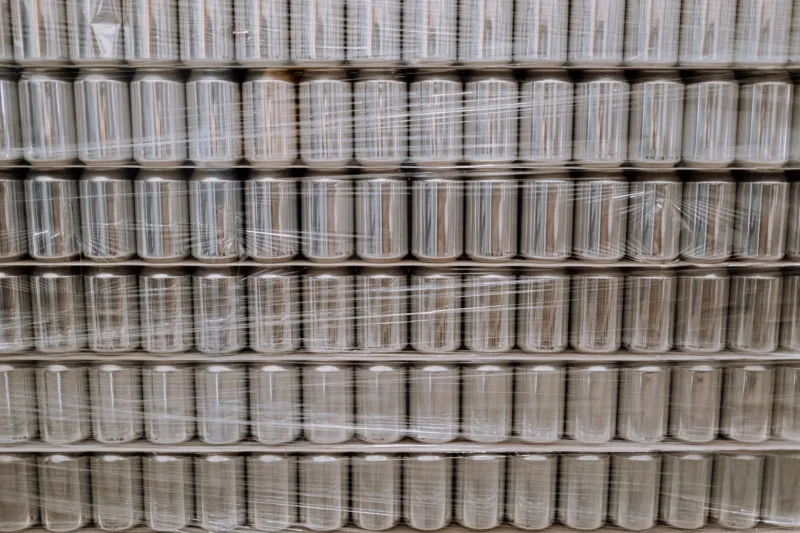
- Retail-ready bundling: Multi-packs of beverages, hardware, personal care items, and household goods benefit from the clean visual presentation shrink wrap provides. It allows label visibility while securing units together — something neither stretch film nor corrugated boxing achieves as efficiently.
- Irregularly shaped products: Shrink film conforms to virtually any geometry. Products with non-standard dimensions — power tools, automotive components, assembled displays — are difficult to package economically with rigid formats.
- Moderate-weight unitizing: For palletized loads that will be handled in climate-controlled environments, shrink wrap offers adequate stabilization with less material per unit than stretch film typically requires.
- Tamper evidence: In industries where tamper-evident packaging is a compliance requirement or a consumer trust signal, shrink wrap's ability to show visible signs of interference is a meaningful advantage.
From a cost perspective, shrink wrap is generally competitive on a per-unit basis for small to mid-size products, particularly when high-speed automated tunnels are in use.
Stretch Film: The Pallet Stabilization Standard
For heavy pallet loads destined for warehouse storage or long-distance freight, stretch film remains the practical standard. It applies quickly, requires no heat equipment, and scales efficiently with machine-applied systems. Where shrink wrap requires calibrated tunnels and consistent heat zones, stretch film can be applied with relatively low capital investment.
However, stretch film offers limited product-level protection and no tamper evidence. It is not appropriate for consumer-facing applications and provides minimal resistance to moisture ingress on individual items. For businesses whose primary concern is pallet integrity rather than product presentation, stretch film is the more cost-effective and operationally simpler choice.
Verdict: Use stretch film for pallet unitizing and warehouse storage. Shrink wrap is the better option when product-level protection, presentation, or tamper evidence is required.
Vacuum Sealing: Specialized but Highly Effective
Vacuum sealing occupies a narrower niche but performs exceptionally well within it. By eliminating oxygen from the package environment, it significantly extends shelf life for perishable goods and provides superior protection against moisture and contaminants. In food processing, medical device packaging, and electronics manufacturing, vacuum sealing meets compliance requirements that no other method can easily satisfy.
The trade-off is cost and throughput. Vacuum sealing equipment is more capital-intensive than shrink wrap systems, and cycle times per unit are generally longer. It is also not appropriate for products that cannot tolerate compression, or for applications where visual presentation through the packaging is a priority.
Verdict: Vacuum sealing is the preferred method where airtight barrier properties are a technical or regulatory requirement. For general industrial packaging, the cost and throughput limitations make it impractical.
Corrugated Boxing: Structural Protection at a Cost
Corrugated packaging offers the strongest physical protection of any method in this comparison. For fragile, high-value, or heavy products, the structural integrity of a well-designed corrugated box — particularly when combined with interior cushioning — is difficult to match. It is also the most widely accepted format for e-commerce fulfillment, where carrier handling conditions are unpredictable.
The limitations are weight, cube efficiency, and material cost. Corrugated boxes add dimensional weight to shipments, which directly affects freight costs under carrier pricing models. They also require more storage space for packaging inventory and generate more solid waste per unit than film-based methods.
For businesses operating under retailer sustainability mandates or working toward packaging waste reduction targets, the shift away from corrugated — or toward right-sized corrugated combined with minimal film wrap — is an active area of compliance planning.
Verdict: Corrugated is the right choice for fragile, high-value, or e-commerce-destined products. For mid-weight goods in controlled supply chains, shrink wrap or stretch film typically offers better economics and a lower material footprint.
Making the Decision: A Framework for 2024
The following questions can help guide packaging method selection for most industrial applications:
- Is product presentation or tamper evidence a requirement? If yes, shrink wrap is likely the strongest option.
- Are you packaging for pallet-level freight stability only? Stretch film is the more practical and cost-efficient choice.
- Does the product require an airtight or moisture-controlled environment? Evaluate vacuum sealing against your compliance requirements.
- Is the product fragile, high-value, or destined for e-commerce fulfillment? Corrugated boxing should be part of the solution.
- Are you subject to retailer sustainability compliance programs or state-level packaging regulations? Material selection across all methods should be evaluated against current and anticipated requirements.
No single method dominates every use case. The most effective packaging strategies in 2024 are those that match method to application — and that treat the packaging decision as a dynamic variable rather than a fixed cost line.